Valorizzando ogni capo

Choosing the right woven interlining is a critical step in garment construction that directly affects fit, comfort, durability, and overall appearance. Whether you are producing tailored suits, structured dresses, uniforms, or traditional wear, the correct interlining provides the necessary support while preserving the fabric’s natural drape.
Woven interlining is a supportive fabric made using a traditional weaving process. It is inserted between the outer fabric and the lining of a garment to add structure, shape retention, and reinforcement. Unlike non-woven or knitted interlinings, woven interlining offers superior stability, strength, and longevity, making it ideal for high-quality and tailored garments.
The wrong interlining can cause stiffness, bubbling, discomfort, or premature garment failure.
The interlining must be compatible with the outer fabric in terms of weight, texture, and behavior. Lightweight fabrics require softer, lighter interlinings, while heavier fabrics need firmer support.
Tip: Always test the interlining with the shell fabric before bulk production.
Woven interlinings come in various weights, from very light to extra heavy. The weight determines the level of structure and firmness provided.
Choosing the correct weight ensures balance between structure and comfort.
Your choice depends on garment type, production method, and quality requirements.
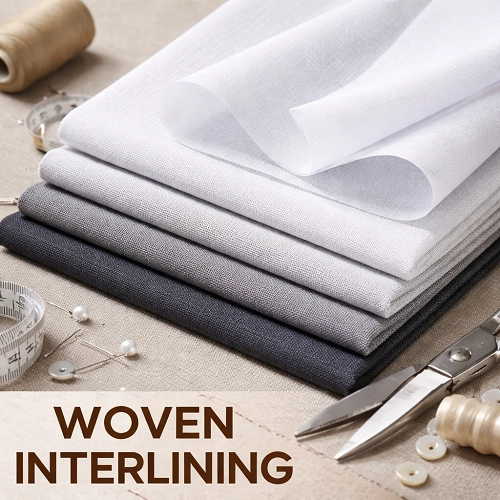
Woven interlining can be made from cotton, polyester, viscose, or blends.
Select fibers that match the performance expectations of the final garment.
The interlining should support the fabric without restricting natural movement. Areas like collars, lapels, waistbands, and cuffs require different levels of flexibility.
Rule of thumb: The interlining should move harmoniously with the outer fabric.
Consider where and how the garment will be worn. Workwear, formalwear, casual clothing, and ceremonial garments all have different structural needs. Climate, wear frequency, and washing conditions should also influence your choice.
Ensure the interlining can withstand the same washing, dry-cleaning, and ironing processes as the outer fabric. Mismatch in care properties can lead to shrinkage, distortion, or bubbling.
Testing minimizes production risk and ensures consistent quality.
Avoiding these mistakes can significantly improve garment performance.
Understanding how to choose the right woven interlining is essential for producing garments that look refined, feel comfortable, and perform well over time. By considering fabric compatibility, weight, construction method, fiber content, and end-use requirements, manufacturers and designers can achieve optimal results. A carefully selected woven interlining not only supports the garment but also reflects craftsmanship and attention to detail—qualities that define high-quality apparel.